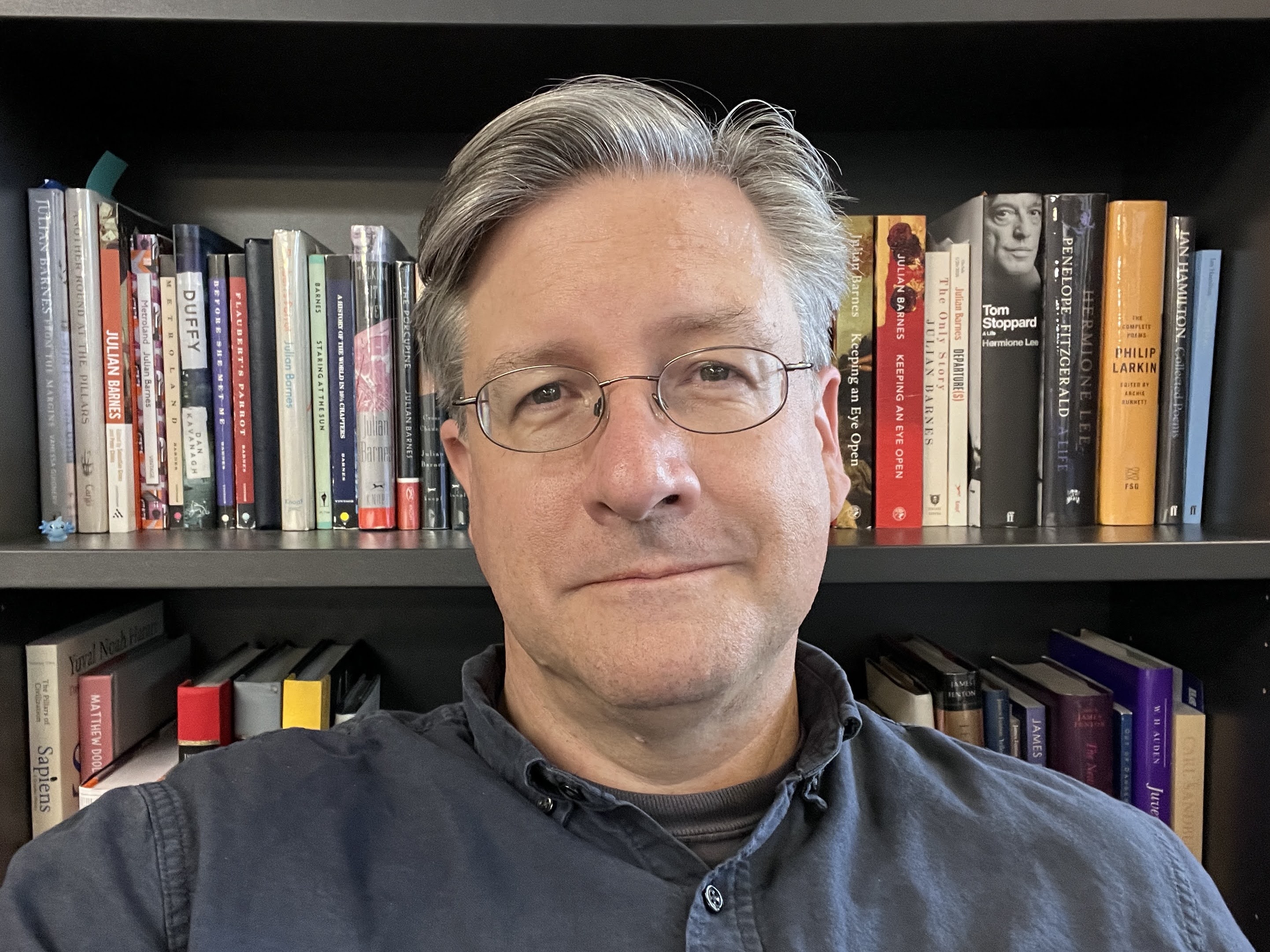
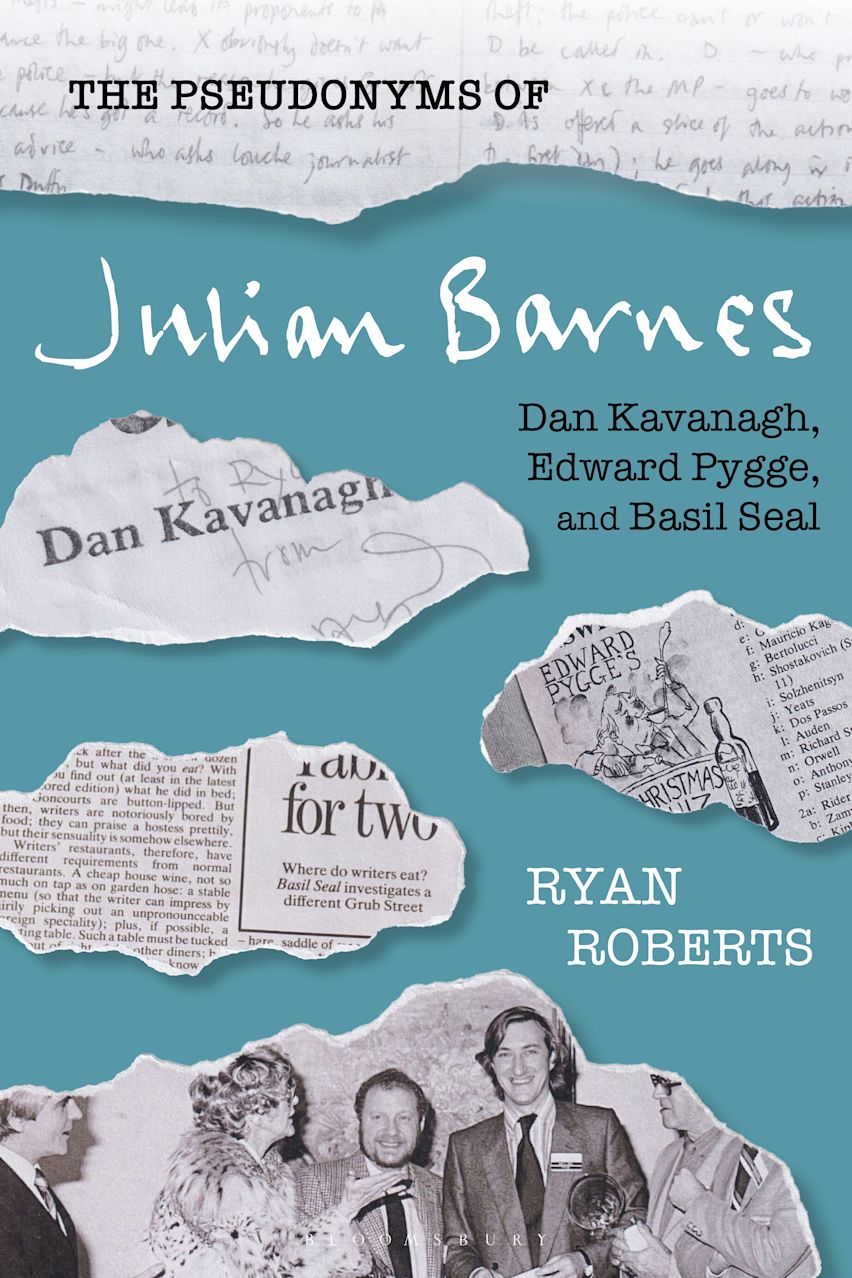
A librarian by profession, my research interests include bibliographies, literature, publishing, book collecting, and other biblio-centric topics. My most recent book is The Pseudonyms of Julian Barnes: Dan Kavanagh, Edward Pygge, and Basil Seal, an in-depth study of Barnes's pseudonym use during his early writing career and how those pseudonyms shaped his approach to writing, his understanding of authorship, and his confidence as a writer.
For more on my publications, please see below.
The Pseudonyms of Julian Barnes:
Dan Kavanagh, Edward Pygge, and Basil Seal
From the Publisher: An exploration of Julian Barnes's many pseudonyms, The Pseudonyms of Julian Barnes: Dan Kavanagh, Edward Pygge, and Basil Seal uncovers the history and development of Barnes as a writer and his playful experiments with authorship. Based on decades of personal correspondence and extensive access to Barnes's private papers, scrapbooks, and book collection, author Ryan Roberts closely examines Barnes's pseudonymous writings as crime writer Dan Kavanagh, critic Edward Pygge, and restaurant reviewer Basil Seal, as well as numerous previously unidentified personas. This study presents a revealing new perspective on Barnes and his writing process.
Forensic and compelling, The Pseudonyms of Julian Barnes traces Barnes's use of pseudonyms and how they evolved from a means of money-making and critiquing his peers, to eventually becoming fully realized authorial characters with unique personalities. Barnes's pseudonymous inventions and their distinct authorial personas allowed him to develop his craft, establish his own literary identity, build confidence, and define his views about authorship and voice. Roberts draws from close textual analysis of Barnes's entire writing career—from his previously unpublished juvenilia, early journalistic efforts, through to his final book Departure(s)—along with biographical and exhaustive archival research to illustrate how Barnes's pseudonyms influenced his writing style, his artistic choices, and thematic explorations throughout his career.
With theoretical reflections on notions of authorship and the practice of using pseudonyms, discussions of British literary cultures from the 1960s and 1970s and offering a behind-the-scenes look at literary journalism and the functioning of major publications such as The New Review and the New Statesman, the book injects rich, fresh insights into the study of one of Britain's most acclaimed contemporary writers.
Additional Publications
A librarian by profession and bibliophile by nature, I have compiled and edited a few volumes related to Julian Barnes, Ian McEwan, and John Fuller's Sycamore Press.
-
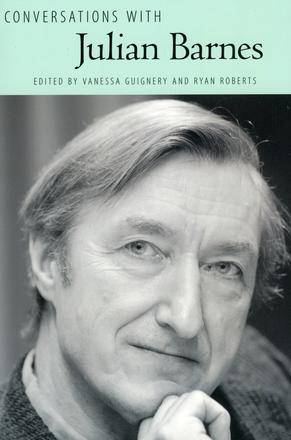
Conversations with Julian Barnes (co-edited with Vanessa Guignery) collects eighteen interviews, conducted over nearly three decades, by journalists and correspondents throughout the world with the author (b. 1946) of such highly praised novels as Flaubert's Parrot and Arthur & George. The interviews collectively address the entirety of Julian Barnes's varied works and provide readers the most vivid portrait yet of contexts and influences behind his ten novels, his short stories, and his essays. The interviews focus not only on the author's fiction but also on his essays, translations, and pseudonymous writings. Barnes's evolving understanding of the themes developed in his works (history, truth, love, art, and death), his views on the art of the writing process, and the role of authors in contemporary society are also discussed at length.
University Press of Mississippi, 2009
-
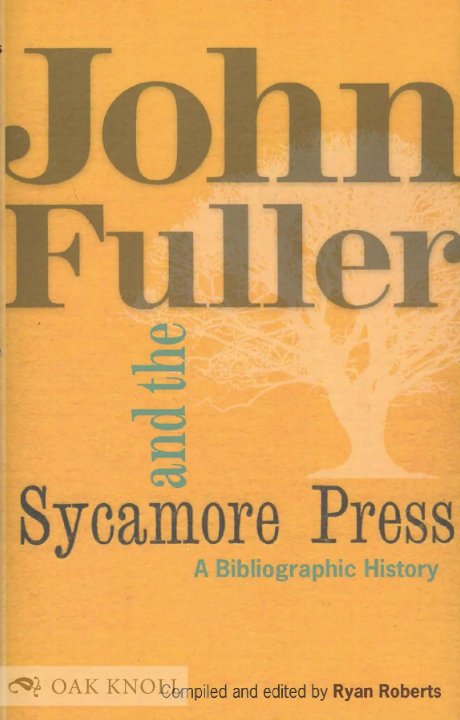
John Fuller and the Sycamore Press provides a fascinating glimpse into the acclaimed poet John Fuller's letterpress operation. Set up in 1968, Fuller's Sycamore Press published some of the most influential and critically acclaimed writers of the past half-century. Operating from a garage, the press published established authors, such as W. H. Auden, Philip Larkin and Peter Porter, as well as promoting young poets, including James Fenton and Alan Hollinghurst. The Sycamore Press ceased operations in 1992, but it remains an excellent example of the unique qualities associated with the small press movement in England.
In addition to a full descriptive bibliography, the book includes an evocative foreword by John Fuller, who wryly describes the trials and tribulations of 'garage' publishing. In a transcribed interview with the author, John Fuller explains why a pamphlet of poems took almost a year to produce as he experimented with letterpress technology. Personal reflections by Sycamore Press authors, such as Andrew Motion and Thom Gunn, illuminate the publishing process further and show what a powerful role John Fuller played in the lives of young poets lucky enough to be published by him.
Oak Knoll Press and The Bodleian Library, 2010
-
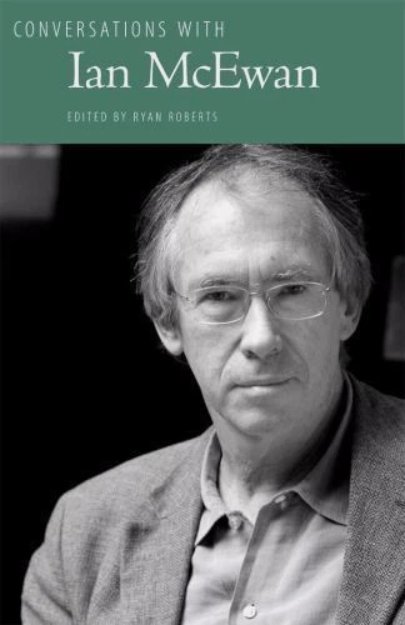
Conversations with Ian McEwan collects sixteen interviews, conducted over three decades, with the British author of such highly praised novels as Enduring Love, Atonement, Saturday, and On Chesil Beach. McEwan (b. 1948) discusses his views on authorship, the writing process, and major themes found in his fiction, but he also expands upon his interests in music, film, global politics, the sciences, and the state of literature in contemporary society.
McEwan's candid and forthcoming discussions with notable contemporary writers—Martin Amis, Zadie Smith, Ian Hamilton, David Remnick, and Stephen Pinker—provide readers with the most in-depth portrait available of the author and his works.
Readers will find McEwan to be just as engaging, humorous, and intelligent as his writings suggest. The volume includes interviews from British, Spanish, French, and American sources, two interviews previously available only in audio format, and a new interview conducted with the book's editor.
University Press of Mississippi, 2010
WHO I AM
I am a professor and librarian at Lincoln Land Community College in Springfield, Illinois. In addition to the publications featured on this page, I maintain the official websites for Julian Barnes, Ian McEwan, James Fenton, Darryl Pinckney, Annalena McAfee, Ian Hamilton, and Hermione Lee.
GET IN TOUCH
Ryan RobertsLincoln Land Community College
5250 Shepherd Road
Springfield, Illinois 62703
P: (217) 786-2771 E: ryan.roberts[at]llcc.edu
SOCIALS

